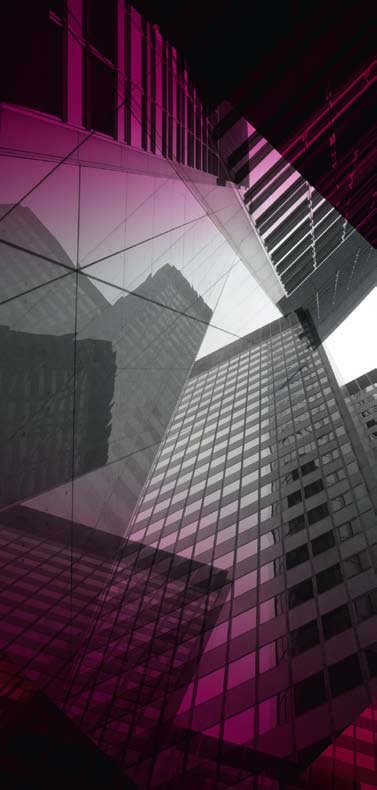
Hochparterre in Frankfurt mit Yasmin Alt und Friedrich Vater

31 01 2011

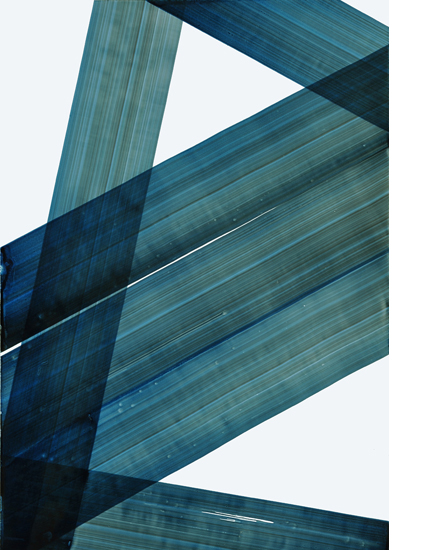
Ab Donnerstag eröffnet die zweite PLAZA Show in der Lobby der Frankfurter Commerzbank mit einer Ausstellung von Yasmin Alt und Friedrich Vater. Begleitend dazu erscheint eine kleine Publikation mit Interviews von mir mit den beiden Künstlern. Insbesondere Yasmin richtet denFokus ihrer Arbeit auf die Auseinandersetzung mit architektonischen Formen.

.

.

PLAZA SHOWS

Hochparterre

Yasmin Alt / Friedrich Vater

4. Februar bis 1. April 2011

Vernissage: Donnerstag, den 3. Februar 2011, um 18:00 Uhr

in der Lobby des Commerzbank-Towers, Kaiserplatz, 60311 Frankfurt

.

.

.

PR-Text: Der Fokus der beiden Künstler liegt auf Installationen und Objekten. Die skulpturalen Arbeiten der 32jährigen Künstlerin aus dem hessischen Bad Schwalbach sind anzusiedeln zwischen Abstraktion und Figuration. Friedrich Vater, 1977 im brasilianischen Salvador geboren, beschäftigt sich mit dem Thema Identität. Er lotet in seinen Arbeiten die Grenzen der Identitätsbindung aus und fragt nach, wie sich die Position des Einzelnen in der Gesellschaft und die Gesellschaft insgesamt wechselseitig beeinflussen.


Music meets architecture: Raumerfinder “vertonen” neuen Raum im Mercedes-Benz-Museum zum 125-jährigen Jubiläum

28 01 2011

Music meets architecture – eine andere Art der Verbindung von Kunst und Architektur, als sie bei deconarch.com gewöhnlich thematisiert wird: Am 30.1.2011 wird im Mercedes-Benz-Museum zum Jubiläum „125 Jahre Automobil“ erstmals seit der Museumseröffnung ein neu gestalteter Raum präsentiert. Die musikalisch-akustische Umsetzung dafür realisiert die Firma Klangerfinder, die u.a. auch den Deutschen Pavillon auf der Expo 2010 in Shanghai vertont hat, gemeinsam mit Studenten des neuen Studiengangs Musikdesign, der seit 2010 an der Musikhochschule Trossingen angeboten wird. Besonderheit: Das Laptop wird als Klang- und Musikinstrument bereits in bei der Aufnahmeprüfung anerkannt.

.

Foto: Mercedes-Benz-Museum

125 Jahre Automobil

30.1.2011

Mercedes-Benz-Museum Stuttgart

.

.

Aus dem PR-Text: Bereits in den ersten drei Monaten konnten die Studierenden des ersten Jahrgangs an verschiedenen realen Projekten arbeiten. Aktuell sind einige der angehenden künftigen Musikdesigner an der Entwicklung des Raumklangs im Mercedes-Benz-Museum Stuttgart im Raum „Mythos 6“ beteiligt. Erstmals seit der Eröffnung des Museums, das von Ben van Berkel entworfen wurde, wird ein Mythosraum neu gestaltet und am 30. Januar 2011 zum Jubiläum „125 Jahre Automobil“ eröffnet. „Für die Studenten ist es eine tolle Erfahrung, gleich bei solch einem Projekt für ein renommiertes Museum wichtige Einblicke in das Arbeitsleben zu bekommen.“ sagt Florian Käppler, Leiter des Trossinger Kompositionslaboratoriums und gemeinsam mit Prof. Dr. Pierre Funck Studiengangsleiter. Als Geschäftsführer der Stuttgarter Firma Klangerfinder, die unter anderem den Deutschen Pavillon auf der Expo 2010 in Shanghai vertont hat, fungiert Käppler als Bindeglied zur beruflichen Praxis.

Mehr zu den Klangerfindern

Mehr zum Studiengang Musikdesign

Mehr zum Mercedes-Benz-Museum Stuttgart


Marina Gadonneix’s “Playground Disorder” in Cologne

21 01 2011

Contrary to familiar artistic practice the work’s creation is not in the artist’s hand but discovered and documented without any intervention. Each situation is based on an essential simulation. Although a clear, unaltered image is on display, it demands an explanation. Marina Gadonneix’s photographs play with the clash of document, simulation and fiction. Deserted places and interiors create a rather disturbing atmosphere in which the line between real objects and fictitious incidents becomes blurred.                             Please click for more info in English

plane, 2009 C-Print, 80 x 100 cm, Edition of 5 © Marina Gadonneix

plane, 2009 C-Print, 80 x 100 cm, Edition of 5 © Marina Gadonneix

.

.

Marina Gadonneix | Playground Disorder

11. Dezember 2010 – 26. Februar 2011

Kaune, Sudendorf , Gallery for
Contemporary Photography,
Köln
www.ks-contemporary.com

.

.

PR-Text: Marina Gadonneix, 1977 in Paris geboren, studierte von 1996-2002 an der École Nationale Supérieure de la Photographie in Arles. In 2006 wurde sie mit dem ‚Prix HSBC pour la Photographie’ ausgezeichnet. Sie lebt und arbeitet in Paris.

Der Titel der Arbeit, ›Playground Disorder‹, weist auf einen spielerischen Umgang mit Orten hin und beschreibt zugleich eine Ordnung die, wie auch immer geartet, konterkariert wird. Und tatsächlich geht es in den beiden Werkgruppen ‚The house that burns every day’ und ‚Crime scenes’, die auszugsweise gezeigt werden, um die Fortführung des Gesamtwerkes Gadonneixs, das sich in den vorherigen weltweit gezeigten Serien manifestiert: Die Dokumentation inszenierter Wirklichkeit. Konträr zu gewohnten Inszenierungen künstlerischen Schaffens, wird diese hierbei nicht vom Künstler selbst vorgenommen, sondern gezielt gesucht, entdeckt und ohne weiteres Dazutun dokumentiert. Der jeweils vorgefundenen Situation liegt eine notwendige Simulation zugrunde.

kitchen #2, 2010 C-Print, 80 x 100 cm, Edition of 5 © Marina Gadonneix

kitchen #2, 2010 C-Print, 80 x 100 cm, Edition of 5 © Marina Gadonneix

Geliefert wird ein zwar klares unverfälschtes Motiv mit sauberer Bildkomposition, das aber dennoch Interpretation und Erklärung fordert. Geschickt spielen Gadonneixs Fotografien mit dem Aufeinandertreffen von Dokument, Inszenierung und Fiktion. Die immer menschenleeren Orte und Räume vermitteln eine beunruhigende Atmosphäre, in der die Grenzen zwischen realer Gegenständlichkeit und fingierten Ereignissen verschwimmen und Diskurs fordern. Von Ruß geschwärzte Räume wie etwa eine Küche, ein Wohnzimmer und ein Arbeitszimmer die zunächst eine Schwarz-Weiß Aufnahme vermuten lassen, stehen einem leuchtend rot-orange brennenden Bett gegenüber.

Scheinbar klare Bilder, die zuletzt weder real noch Kulisse sind, wir sehen keine Wohnräume noch tatsächliche Möbelstücke – was wir sehen sind gelernte Proportionen, festgemacht an Höhen, Tiefen und Formsprache – eine Illusion aus Edelstahl und Beton deren Grauwerte weniger einem Entwicklungsprozess von Fotomaterialien denn der dort vorherrschenden Rußentwicklung entsprechen. Andere realitätsnah eingerichtete Räume lenken den Blick von der Einrichtung auf gelbe Störer die jedwede funktionale Sinnhaftigkeit der Umgebung komplett verschwinden lassen um die Konzentration auf, für die Bildkomposition eigentlich unbrauchbare Details zu lenken.

Diese zunächst deutlich spürbare Sinnlosigkeit entpuppt sich dennoch als große Sinn- und Wahrhaftigkeit im dankenswerten Auftrag der gesellschaftlichen Basiskonstitution.
Wir sehen die blanke Realität zivilisatorischer Entwicklung, Übungsplätze für ‚Worst-Case-Szenarien’ die täglich ebenso bespielt werden wie der Rest der Welt mit den realen Abläufen, deren Behandlung hier trainiert werden soll.

Info + illus. courtesy Kaune, Sudendorf


NEU Hartz IV Möbel: Berliner Hocker 10 Euro, 10 Schrauben, 10 Minuten

18 01 2011
Nach dem großen Erfolg des 24 Euro Chairs und des Kreuzberg 36 Chairs wird am Wochenende im Berliner Maxim Gorki Theater das neueste Hartz IV Möbel von Le Van Bo präsentiert: Der Berliner Hocker. Im Rahmen einer Aktion (Workshop) im Maxim Gorki Theater baut Bo mit Theaterbesuchern das neue Möbel. Das Konzept: Der Berliner Hocker kostet 10 Euro an Material, braucht 10 Schrauben und wird in 10 Minuten gebaut.
.
.
Workshop Bau den Berliner Hocker (Hartz IV Möbel)
mit Le Van Bo
Samstag, 22. Januar
15-17 Uhr
17:30 Uhr Podiumsdiskussion “Maßnahmen gesellschaftlicher Teilhabe”
Garten

Am Festungsgraben 2
10117 Berlin-Mitte
Bhf Friedrichstrasse

Veranstalter: Maxim Gorki Theater, Berlin
Beginn: 15 Uhr (Ende 17 Uhr)
Workshop-Gebühr: 0 Euro
Materialkosten: 10 Euro/Berliner Hocker
Keine Anmeldung erforderlich, Werkzeug vorhanden.

http://hartzivmoebel.blogspot.com/p/berliner-hocker.html

.

.

Auszug aus Programmheft (Maxim Gorki Theater): Ein Hocker ist ein Behältnis ist ein Regal ist ein Rednerpult … Der Berliner Architekt Le van Bo, Designer des liebevoll „Hartz-IV-Sessel“ betitelten Sitzmöbels zum Selberbauen und Initiator Berlinweiter Guerilla Loungings, hat exklusiv für das Maxim Gorki Theater das Möbelstück zur Inszenierung „Früchte des Zorns“ entworfen: ein mobiles Wohnelement für wandernde Heimaten.

Sein Preis: etwas Holz, eine Stunde Lebenszeit und Schwielen an den Händen.
Antikapitalistische Raumgestaltung mit den Mitteln der Innenarchitektur. Wohnkultur als Protestkultur: Lichterketten waren gestern! – bilden wir unsere eigene Verwertungskette! Unter Anleitung Le van Bos und mit der Unterstützung der Tischlerei des MGT Berlin können alle Freunde des Hobels und der Späne, alle Hobbyhandwerker, Gesellschaftsgestalter und zufällige Vorbeiflanierer sich ihren höchstpersönlichen Hocker bauen.
Wer möchte, kann sein Exemplar anschließend als temporäre Leihgabe dem Maxim Gorki Theater überlassen. Wir schenken Ihrem Hocker ein erstes Leben als Rauminstallation oder Bühnenelement, wir steigern seinen Wert um die Zinsen des Gebrauchs, bevor er aus der Vergesellschaftung zurückwandert zum Einzelnen.
Material und Werkzeug wird gestellt; Unkostenbeitrag für das Material: 10 Euro
Den Bauplan finden Sie ab Februar kostenlos unter: hartzivmoebel.blogspot.com
Infos + Abb. Le Van Bo


Lage 3:20 #1 _ An exhibition en miniature

17 01 2011

Later this week, the first exhibition at a new “art production space” in Berlin is opening: Lage 3:20#1 is the show, Lage 3:20 is the project space – the numbers referring to the mathematical proportions of a miniature model of 15cm to 100 cm in reality. Embedded in a large table, a model of the office is made available to curators for the development of exhibition projects : they will work directly (up)on the model.

Admittedly, a very unusual idea – and exciting to see how an exhibition “en miniature” works out!

.

LAGE 3:20 #1
with / mit Alexine Chanel, Jacques Alexandre Gillois, Clemens Helmke, Norvin Leineweber, Nicolas Milhé, Bruno Nagel

kuratiert von Jofroi Amaral, Pierre Granoux und Jean-François Karst

20. Jan. – 12. Feb. 2011, Opening / Eröffnung 19. Januar, 19 h

LAGE 3:20, Berlin

www.lage3zu20.de

.

About: LAGE EGAL ist ein neuer Produktionsraum in Berlin-Prenzlauer Berg. Über seine Bestimmung als Künstleratelier hinaus soll LAGE EGAL zum Experimentierfeld für Austausch und Begegnung, Netzwerke von Künstlern, Kuratoren und Mittlern der zeitgenössischen Kunst werden.

LAGE 3:20 ist ein von den Künstlern Jofroi Amaral, Pierre Granoux und Jean-François Karst speziell für den Raum LAGE EGAL konzipiertes Projekt, mit dem Ziel, die Mechanismen der Kunstvermittlung, der Präsentation und der Vermarktung von Kunstwerken experimentell zu erkunden. Ausgangspunkt des Projektes LAGE 3:20 ist das Modell der Atelierräume im Maßstab 3:20. Die Benennung des Maßstabes ist zugegebenermaßen unkonventionell, entspricht jedoch mathematisch gesehen dem Verhältnis von 15 cm im Modell zu 100 cm in der Wirklichkeit.

Das Modell ist in eine großflächige Tischplatte eingelassen. Diese Kombination aus Schreibtisch und Architekturmodell soll Kuratoren zur Verfügung gestellt werden, die im (und am) Modell eine Ausstellung gestalten können.

LAGE 3:20 is located in the Berlin district of Prenzlauer Berg. More than an artist studio, LAGE EGAL also aims to be a laboratory for meetings, exchange and networking, not only open to the artists but also to the curators and all other actors of the contemporary art.

LAGE 3:20 is an exhibition project initiated for the space LAGE EGAL by the artists Jofroi Amaral, Pierre Granoux and Jean François Karst, motivated by the desire to experience the conditions of exhibition of art and its dissemination. The project LAGE 3:20 presents the model of the studio space, scale 3:20 that corresponds to a ratio of 15 cm (5.90 inches) in the model to 100 cm (39.37 inches) in reality.

Embedded in a large table, this office-model is made available to curators for the development of exhibition projects : they will work directly (up)on the model.

Info + illus. Lage Egal


“Mecanismo da troca” by Inês d’Orey

15 01 2011

Portuguese photographer Inês d’Orey has initiated a photography book “Mecanismo da troca”. A deconarch.com interview with Inês can be found here.

More on Inês d’Orey’s Website

.

Mecanismo da troca [Swop mechanism] is a book with photographs, collages and notes, invented or revisited by Inês d’Orey, and intersected with the writing of Eduardo Brandão, Filipa Leal, Hugo Gonçalves, Jacinto Lucas Pires, Leonor Baldaque, Luís Gouveia Monteiro, Marta Lança, Nuno Sobral and Raquel Freire.
Coordination by Maria Burmester. Introduction text by José Luís Tavares.
Texts in portuguese.

You can browse through Mecanismo da troca here.

18 x 18 cm | 7 x 7 inches
ISBN: 978-989-20-1903-1
Available for sale at Blurb: [softcover edition] or [hardcover edition].


“Deconstructing and reconstructing structures, experimenting with intuitive colour neighbourhoods and offering them in another context.” Interview with Pierre Juillerat

9 01 2011

Pierre Juillerat’s paintings evoke surprisingly contradictory associations, such as calm and speed, abstraction, contemplation, reduction. Reduced on colour fields, the art works show nothing but pure basic forms and colours, volumes and surfaces, referring to nothing but themselves. The Swiss born artist, now residing in Berlin, wants to capture the tension that calmness emanates. He tries to articulate and explore the mental space between thoughts, the in-between of intuition and intelligence.

Q_46.8038, 2010, and Q_46.8037, 2010, Pigmented ink on archival paper 42 x 29,7 cm Edition of 12 + 3 EA's Dated, signed

Q_46.8038, 2010, and Q_46.8037, 2010, Pigmented ink on archival paper, 42 x 29,7 cm, Edition of 12 + 3 EA's Dated, signed © P. Juillerat

Many experiences merge in Juillerat’s art, a trained architect, who also played bass guitar and violin in rock bands, worked as bike messenger, as an airline pilot, as a transporter and in a record shop. For about 20 years now, art has been the central anchor of his work.

Contradictions – or rather complexity – also mark Juillerat’s working process. “As much as needed, as little as required”, his approach could be summarised: the artist refrains to known figurative motives and reduces his paintings to colours and forms. The painting becomes an object in itself. Juillerat’s works have titles like “B_62.6 “ or“Q_46.803“. They are index numbers of the artist’s personal archive. These paintings don’t represent anything, they don’t symbolize anything, don’t create a narrative illusion – they are what they show: an image carrier covered with a painted surface, with colours, lines, fields, forms.

Yet as a painted object, Juillerat’s artworks start to react on their environment and their viewer, mirroring the outside world in its shiny surface or refusing such an interplay on matt surfaces.

Juillerat paints on different image carriers, such as aluminium sheets – as used in aviations –, paper, acrylic glasses and canvas, using “cheap“ industrial paint, lacquer and resin. His work makes mass production meet handicraft, seriality and technology meet singularity.. The paint gets applied in an even, consistent way without any hint of narrative structure. The  paintings seem to be industrially  conceived, but they are still created manually. On the edges, traces of paint overflow, indicating the transition from the “controlled” to the “uncontrolled” part of the painting, also revealing the horizontal application of paint. The act of painting is characterized by slowness, concentration, and every result is unique and not repeatable.

In the following interview, Pierre Juillerat tells us what working as an artist means to him, how his background in architecture still influences his art works and what he is exhibiting at SAVVY Contemporary.

(This essay and the interview were published on the occasion of the exhibition “Perspectives on in/outside” at Savvy Contemporary, Berlin. The interview below has been abridged.)

Illustrations © Pierre Juillerat

www.pierrejuillerat.com
www.pierrejuillerat.blogspot.com

.

INTERVIEW

B_76.5215, 2010, Lacquer and acrylic on canvas, 200 x 160 cm, Exhibition view, "Alpha Floor", dr. julius | ap, Berlin, 09 / 2010

B_76.5215, 2010, Lacquer and acrylic on canvas, 200 x 160 cm, Exhibition view, "Alpha Floor", dr. julius | ap, Berlin, 09 / 2010

You are a trained architect. Even though you don’t work as such anymore, you are still very into it, as you say. Why architecture?

Architecture was chosen at that time because I was interested in helping to define our built environment. I was convinced (and still am) that some of our behaviours are directly influenced by the kind of spaces we live in or we go through. Sociological structures can be confirmed, dissolved or expanded by architectural intentions and I was keen to discover these mechanisms, especially within the urban context.

The feasibility of designing and developing processes seemed interesting to me, too, as I was not attracted  by a purely theoretical approach of things.

When did you “change” to be an artist? What possibilities does art offer?

I don’t think it is a change, but a logical continuation of the architectural thinking in its essence. Art indeed offers the possibility to act subjectively within my own perception of space, regardless of the outcome. The social responsibility of an artist is also much more vague than the architect’s, who has to satisfy numerous needs not really related to his own vision of things. Maybe this grey zone within the artistic work is necessary to clear “mental fog”. Additionally, failures and successes can easily be integrated into a more experimental way of working.

You mentioned “mental fog” – could you specify this thought a little more?

This refers to the fragmentation of the soul. In my opinion, artistic work can be a way to recollect spread soul fragments, comparable to the quest of a holy grail.

Q_30.341, 2010 | Q_30.342, 2010 | Q_30.344, 2010 | Q_30.345,  all 2010, lacquer on canvas, 46 x 37 cm  Q_30.347, 2010 Lacquer on canvas 46 x 37 cm

Q_30.341, 2010 | Q_30.342, 2010 | Q_30.344, 2010 | Q_30.345, all 2010, lacquer on canvas, 46 x 37 cm Q_30.347, 2010 Lacquer on canvas 46 x 37 cm

When did you discover the artistic work as your means of expression?

Back in 1985, I was tremendously impressed by a show of new German expressionists at the Museum für Gegenwartskunst in Basel. A painting by Rainer Fetting was a revelation and I headed out to start painting. For several years I was committed to this direction, which ended with the Océanautes series, followed by a transition phase where architectural elements were introduced more consciously to progressively replace human figuration.

What are you interested in? What is the subject of your work?

Deconstructing and reconstructing structures, experimenting with intuitive colour neighbourhoods and offering them another context could be described as what I’m interested in. Maybe we can also talk about acceleration and deceleration, “Verschachtelungen” (nesting), spacial disorientation, navigation and so on.

I also like the process of applying paint onto a surface very much. Painting is about paint. That’s why I do not use paint as a medium but as a “subject” in itself, trying to celebrate the energy of the pure colour surface. I believe that this way of working generates a position which is not based on abstractions of the outside world but relies solely on itself.

C_51.802, 2010, Drawing ink on paper, 42 x 29,7 cm

C_51.802, 2010, Drawing ink on paper, 42 x 29,7 cm

How does architecture influence your artistic work?

Architecture in its wider understanding is linked to human existence and cannot be separated from my work. I think that the analysis of room defining elements, spaces and intermediate spaces are a starting point for my practice. Non-constructed spaces like “mental rooms” and intermediate “mental rooms” influence the process, too, e. g. by asking what kind of space lies between two thoughts, what kind of mental activity happens there, if any, and how can I get there?

Another point triggered by architecture is the fact that we have to move through space to perceive it and I’m interested in observing how automated these moves can be. Similar thoughts influence the representation of space in my work, using multiple vanishing points often lying outside the painting. Parallelism and symmetry of linings or colour fields are not avoided consciously, they somehow just do not happen.

How is your working process?

Work generates work … One working group will normally generate other ones. But generally speaking, I occasionally take pictures directly related to a project, but normally existing works are recombined as a new starting point; vanishing points and colour simulations are developed in sketches, drawings and sometimes with the help of a computer. As with this constructivistic approach of  conceptions, plans are established from a selection of pre-works and they are quite strictly adhered to when it comes to realize the painting. Finally, I do believe that everything can be part of an inspiration.

What materials do you work with? The Océanautes and the more recent works are very different in style and technique.

I like industrial paint, lacquer and wall paint. For drawings I use ball pens and stuff which I can find within fifteen seconds. More recently drawing ink has been used for a new series of work on paper.

Why these materials?

They are “cheap”, consistent and solid. Furthermore the surfaces offer an appearance which I could not get with “artists’” paint. Additionally the choice of colours is endless which partially eliminates the need to mix your own colours in the studio. And I really appreciate to work with industrial colour makers, too. They are helpful to  refine colour shades which  are originally based on colour charts. The references of these customized shades are stored and the paint can be reproduced at any time. I also think that industrial applications of paint have got some qualities which are not available from manual working techniques.

C_26.451, 2010 Lacquer on metal shelves 70 x 100 cm

C_26.451, 2010, Lacquer on metal shelves, 70 x 100 cm

Your paintings have titles like “B_62.6“ and “Q_46.803“. What do these titles mean?

These titles simply refer to my system of organizing the work. There are normally numerous steps ahead of a decision to realize a definite painting or object. Within a series of work every step and subchapter is referred to by its own letter – number combination, which allows me to trace the steps back to the origins of a piece..

Pierre Juillerat, thank you very much!

.

.


Jennifer Mason’s Spatial Disruptions

5 01 2011

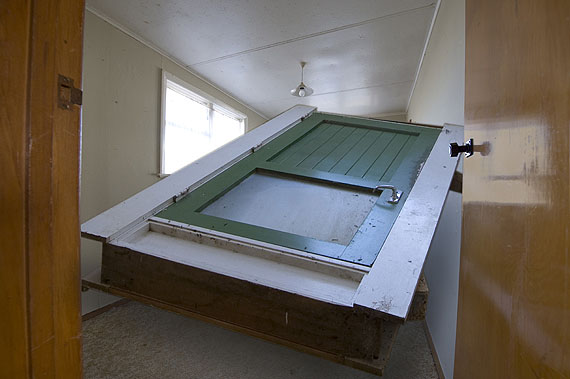
View on the other side of the pond: This show is already over with the end of 2010, but nevertheless New Zealand photographer Jennifer Mason‘s work deserves mention. Her “Spatial Disruptions” series explores domestic, suburban architecture. She is interested in the shape, the empty space and the tonality that is inherent within these architectural clusters.

Jennifer Mason, Fixed, Inkjet, Print 457 x 304 mm, 2010

Jennifer Mason, Fixed, Inkjet, Print 457 x 304 mm, 2010

.

.

Jennifer Mason
Spatial Disruptions

{Suite} Fine Art Gallery
Wellington, New Zealand
12 – 29 December 2010

.

.


PR Text: Spatial Disruptions is concerned with the meaning of formal disorder. Familiar domestic spaces lacking in architectural continuity and figural presence are arranged in such a way as to render them functionless or meaningless. What were once places to inhabit have become a source for formal experimentation.

Walls, windows and cupboards – the stuff of domestication – are composed in almost abstract terms and without recourse to familial themes. Rather than enhancing the innate culture that exists behind the façade of a family home (as Jennifer Mason has done in the past), here Jennifer is interested in the shape, the empty space and the tonality that is inherent within these architectural clusters.

Jennifer Mason, Cut, Inkjet print, 457 x 304 mm, 2010

Jennifer Mason, Cut, Inkjet print, 457 x 304 mm, 2010

Yet the works still deliberately impart a sense of the domestic. Redundant pot plants and paintings are situated within these spaces as conspicuous vestiges of a human presence, as a reminder of the domestic sub-text. In other words, the works are not entirely ignorant to a parallel reading that points to the soulless monotony of day-to-day domestic existence. These interiors are templates for white suburban culture. But the interiors cannot be lived-in as they are inverted, meaningless rooms that open out into endless voids.

Jennifer has isolated architecture’s capacity to alter the mood of those who exist within it by forcing the viewer to simultaneously inhabit both the work itself and the gallery that inhabits it. In this sense Jennifer is an artist dealing with, in broad terms, experience but also the experience of art and its role as a consumer product.

Born 1978, Jennifer lives and works in Auckland, New Zealand. Trained in Fine Arts, she also holds a BA from the University of Auckland, New Zealand, and has studied at Stony Brook University, New York.

jennifermason.co.nz

Info + illus. courtesy {Suite} Fine Art Gallery


Sedimente einer Stadt: Mona Breede in Berlin

5 01 2011

Until 15. Januar, Berlin Galerie Dittmar presents Mona Breede’s photography in “Berlin – sediments of a city”. The photographer captured numerous people on different streets and squares, thus mirroring growing social tensions. Using urban views and architectural citations, Breede visualizes layers and sediments of the city of Berlin.

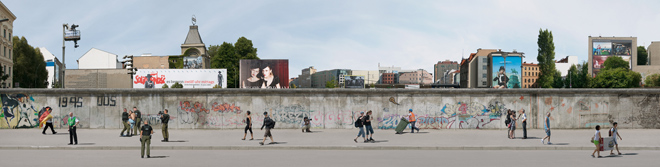
How long is now, 2010 Mit Sicherheit keine Freiheit, 2010 Mona Breede Fotografie 50 x 200 cm / 75 x 300 cm

How long is now, 2010 Mit Sicherheit keine Freiheit, 2010 Mona Breede Fotografie 50 x 200 cm / 75 x 300 cm

.

Mona Breede | Berlin – Sedimente einer Stadt

12. November 2010 bis 15. Januar 2011
Galerie Dittmar

.

.

Aus dem PR-Text: In der Ausstellung Berlin – Sedimente einer Stadt zeigt Mona Breede ein seismografisches Bild unserer Gesellschaft. Ort und Hintergrund der vielschichtigen Inszenierungen bilden Berlin. Die Fotografin hat an einer Vielzahl von Straßen und Plätzen unterschiedlichste Menschen mit der Kamera festgehalten, wodurch sich in den Konstellationen die zunehmenden gesellschaftlichen Spannungen spiegeln. Formal herrscht dabei stets ein feiner choreografischer Rhythmus vor. Zusammen mit den Stadtansichten und Architekturzitaten werden somit die Schichten und Ablagerungen einer Stadt visualisiert.

Mona Breede, 2010, Berlin – Sedimente einer Stadt, Fotografie, 50 x 200 cm

Mona Breede, 2010, Berlin – Sedimente einer Stadt, Fotografie, 50 x 200 cm

Die Serie der vier Mauerpanoramen bilden dabei eine eigene Werkgruppe. Mauern als Symbole für Trennung und Abgrenzung wie als gestalterisches Element durchziehen das Werk von Mona Breede seit vielen Jahren. In Berlin ist die Mauer untrennbar mit der Geschichte Deutschlands verbunden und die wenigen Reste werden heute als touristische Reliquien behandelt oder entsprechend neu inszeniert.

In der Werkgruppe der Künstlerin ist die Berliner Mauer nur noch Reminiszenz, historische Folie und Resonanzraum für die weitergehenden Betrachtungen über die Mauern und Konfliktpotentiale, die sich in einer Gesellschaft auftun, die mit vielfältigen sozialen Umbrüchen konfrontiert ist. So thematisiert “Mit Sicherheit keine Freiheit”, dem Slogan eines Gewinnmotivs der Plakatwerbung der Organisation Aktion Mensch entnommen, einen Konflikt in unserer Gesellschaft, indem die zunehmende Überwachung auch in die Gefährdung unserer Freiheit umschlagen kann.

Formal setzen sich die Panoramen aus vielen, einzelnen Bildfragmenten zusammen, in denen neben verschiedenen Personenkonstellationen und Architekturen in reichem Maße Bildzitate wie Graffitis, Häuserbemalungen oder Werbetafeln verwendet werden. Das Zusammenwirken dieser verschiedenen Bildebenen und semantischen Verweise ergibt ein komplexes und vieldeutiges Bild der Realität. Gleichzeitig kreieren diese Konfigurationen eine Bildrealität von hohem ästhetischem Reiz.

Info + illus. courtesy Galerie Dittmar